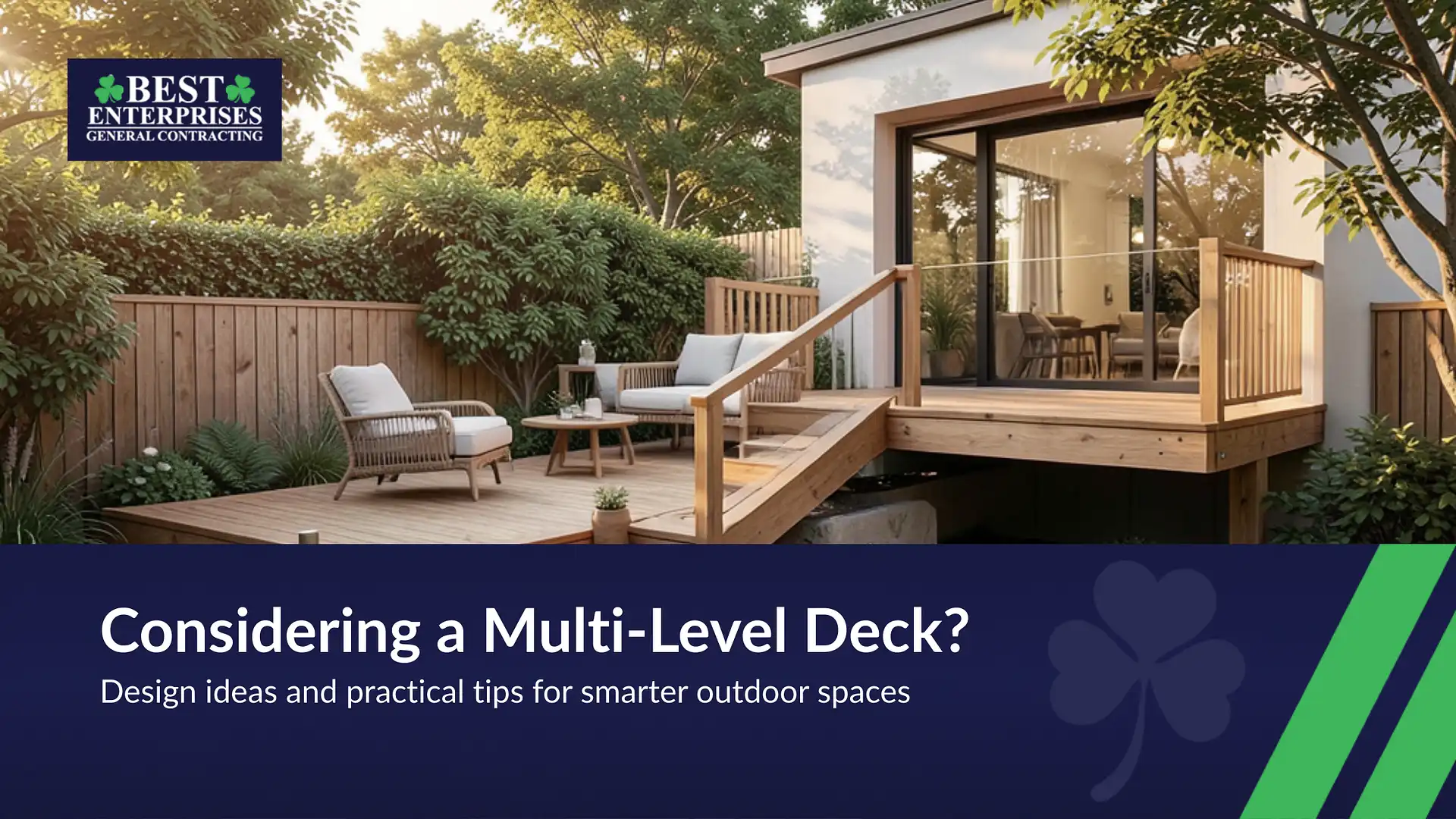
A well-designed deck can completely change how you use your backyard. But if you want more than a simple platform, a multi level deck design offers flexibility, style, and serious functionality. Whether you’re working with a sloped yard or just want defined outdoor living zones, multi-level decks give you room to entertain, relax, and add value to your home.
In this guide, you’ll discover smart multi level deck ideas, practical planning tips, cost considerations, and what to know before building. If you’re considering a custom outdoor space in the U.S., this article will help you make informed decisions before construction begins.
What is a Multi-Level Deck?
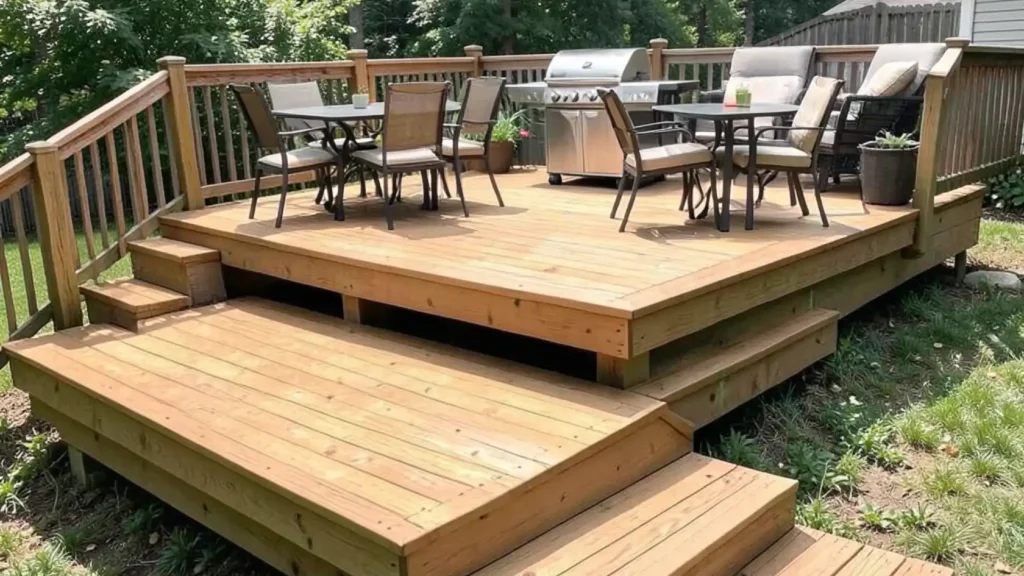
A multi-level deck features two or more connected platforms built at different heights. Instead of one flat surface, the deck steps down or up in tiers. Each level can serve a different purpose: dining on one, lounging on another, and grilling on a separate section.
This layout works especially well for:
- Sloped backyards
- Homes with walk-out basements
- Large families who entertain often
- Homeowners wanting a structured outdoor layout
Unlike a traditional single-level deck, this design allows you to create defined spaces without walls. That’s why multi level deck design ideas for backyard renovations continue to grow in popularity across the U.S.
Why Homeowners Love Multi Level Deck Designs
1. Maximizes Usable Outdoor Space
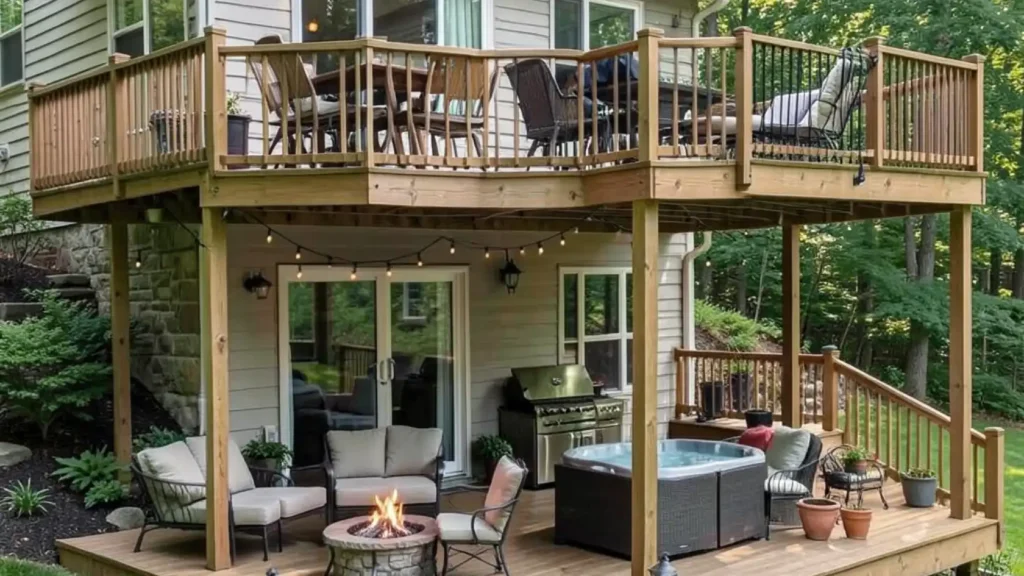
Instead of fighting your yard’s slope, you can work with it. Tiered construction reduces the need for extensive grading while creating natural transitions between areas.
For example:
- Upper level: dining table near the kitchen
- Middle level: casual seating or outdoor kitchen
- Lower level: fire pit or hot tub
This separation improves flow and prevents overcrowding when guests gather.
2. Boosts Property Value
According to the National Association of Realtors, outdoor living upgrades consistently rank high among projects that appeal to buyers. A professionally built deck increases visual appeal and functional space, which can make your home stand out in competitive markets.
3. Improves Entertaining and Traffic Flow
With a single deck, everything happens in one place. A multi-level layout naturally directs movement. Guests can circulate between areas without blocking the grill or bumping into furniture.
Multi Level Deck Ideas to Inspire Your Backyard
Let’s explore design approaches that balance style and practicality.
1. Tiered Entertaining Zones
This is one of the most requested multi level deck ideas. The upper tier connects to your home’s main entrance. From there, wide stairs lead down to a relaxed seating area with built-in benches. This layout feels intentional and organized.
2. Modern Multi Level Deck Design
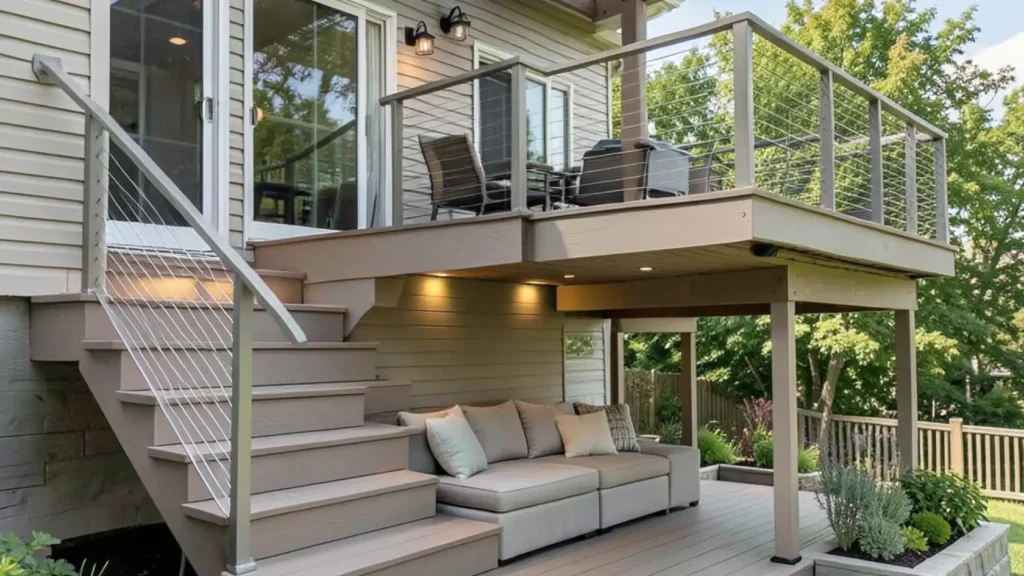
A modern multi level deck design typically features:
- Composite decking in neutral tones
- Horizontal cable railing systems
- Integrated LED stair lighting
- Clean lines with minimal ornamentation
Composite materials have grown in popularity because they resist fading, splintering, and insect damage. Many brands now offer 25-year warranties.
3. Backyard Designs for Sloped Terrain
Sloped yards can be expensive to level. Multi-tier decks eliminate that need. By building at staggered elevations, contractors reduce soil disturbance and improve drainage management.
You can also integrate retaining walls or planters into the structure for added visual interest.
4. Covered and Open Combinations
Some homeowners add a pergola or covered upper level while leaving the lower level open to the sky. This creates shade without sacrificing sunlight entirely.
How to Plan a Multi Level Deck Design
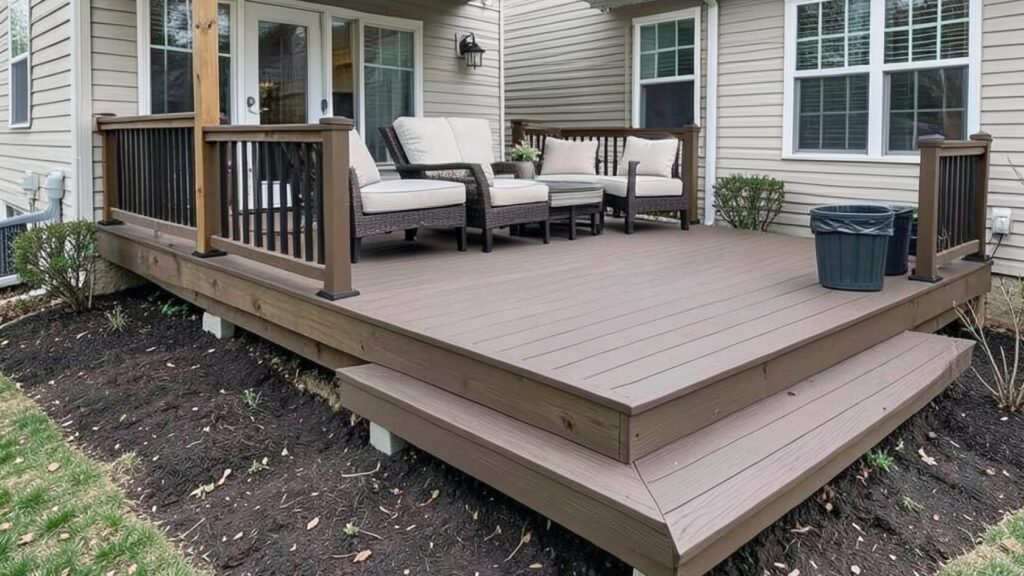
Careful planning makes the difference between a deck that looks good and one that functions well for decades.
1. Assess Your Yard Layout
Start with elevation changes and drainage patterns. Water should flow away from your home and not pool between tiers. A contractor will measure soil conditions and determine appropriate footing depth based on local frost lines.
In many U.S. regions, frost depth can range from 12 to 48 inches. Proper footing placement prevents shifting during freeze-thaw cycles.
2. Define the Purpose of Each Level
Before finalizing your design, ask yourself:
- Will you host large gatherings?
- Do you want an outdoor kitchen?
- Is privacy important?
- Do you plan to add a hot tub or fire feature?
Each purpose affects load requirements and layout.
3. Choose the Right Materials
Your material choice affects cost, maintenance, and lifespan.
4. Pressure-treated lumber
- Affordable upfront
- Requires staining and sealing every 2–3 years
5. Composite decking
- Higher initial cost
- Minimal maintenance
- Long lifespan
6. PVC decking
- Lightweight
- Moisture-resistant
- Ideal for humid climates
In coastal or humid states, composite or PVC often outperforms natural wood over time.
How to Build a Multi Level Deck (Step-by-Step Overview)
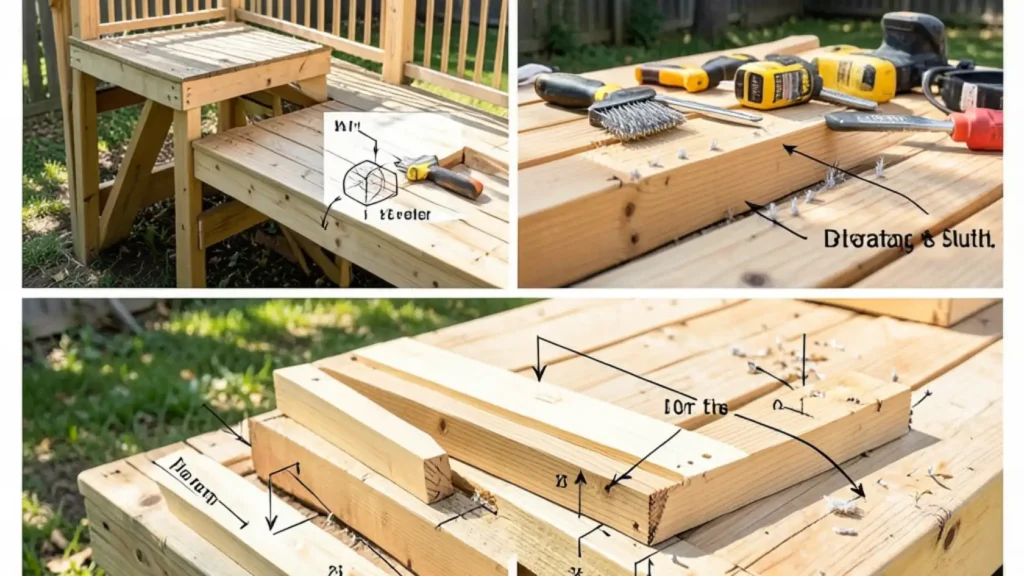
If you’re researching how to build a multi level deck, here’s a simplified overview of the process. While experienced DIYers can attempt it, most homeowners benefit from hiring a licensed contractor.
Step 1: Design and Engineering
A contractor creates detailed drawings that account for weight loads, joist spacing, stair placement, and railing height. Structural integrity matters more in multi-tier designs because of height changes.
Step 2: Permits and Local Codes
Most U.S. municipalities require permits for elevated decks. Codes typically regulate:
- Guardrail height (usually 36–42 inches)
- Stair rise and run dimensions
- Ledger board attachment methods
You can review model building standards through the International Code Council, though local rules may vary.
Step 3: Foundation and Framing
Concrete footings anchor support posts below the frost line. Builders then construct beams and joists to form the deck’s skeleton.
Precision matters here. Poor framing can lead to sagging or uneven levels.
Step 4: Decking, Railings, and Stairs
Deck boards are installed perpendicular to joists. Railings and staircases connect levels seamlessly. Lighting and built-in seating often go in at this stage.
Step 5: Inspection and Finishing Touches
After inspection approval, contractors apply finishes (if using wood) and complete final adjustments.
Practical Considerations Before Installation
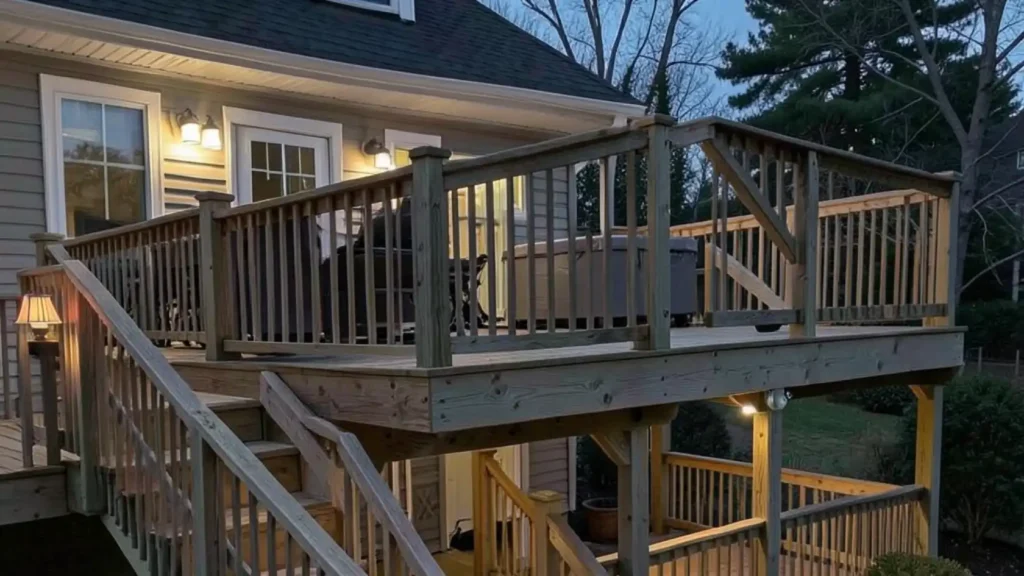
1. Safety and Structural Strength
Multi-level decks require careful load calculations, especially if you plan to install heavy features like hot tubs or outdoor kitchens. Always confirm that your structure meets residential load requirements.
2. Maintenance Requirements
Wood decks require consistent upkeep. Composite materials reduce maintenance but still need occasional cleaning.
Plan for:
- Annual inspections
- Cleaning debris between boards
- Checking fasteners and railings
3. Drainage and Water Control
Water runoff from upper tiers should not damage lower levels. Contractors often install flashing and drainage systems to protect structural components.
4. Accessibility and Stair Design
Wide staircases improve safety and traffic flow. Adding lighting along steps reduces fall risks at night.
How Much Does a Multi-Level Deck Cost in the U.S.?
Costs vary based on size, material, and region. On average:
- Basic pressure-treated multi-level decks: $35–$50 per square foot
- Composite multi-level decks: $45–$70+ per square foot
Complex layouts with built-in kitchens, pergolas, or premium railings increase overall costs.
Labor accounts for a significant portion of total investment, especially when engineering and custom carpentry are involved.
Modern Trends in Multi Level Deck Design
Outdoor living continues to evolve. Popular features include:
- Built-in benches with storage
- Integrated LED lighting
- Cable or glass railing systems
- Outdoor kitchens and bars
- Eco-friendly decking materials
Homeowners increasingly treat decks as outdoor rooms rather than simple add-ons.
Why Professional Installation Matters
Building a multi-level deck involves structural engineering, code compliance, and precision craftsmanship. Hiring experienced professionals reduces costly mistakes and ensures long-term durability.
At Best Enterprises General Contracting, our team specializes in designing and building custom decks tailored to your property and lifestyle. We handle permits, structural planning, and material selection so you can focus on enjoying your outdoor space.
If you’re exploring multi level deck design ideas for backyard transformation, working with experts ensures your project meets local codes and stands the test of time.
Ready to Transform Your Backyard?
A thoughtfully planned multi level deck design creates defined spaces, improves flow, and enhances your home’s value. Whether you prefer a traditional wood layout or a modern multi level deck design with composite materials, the right plan makes all the difference.
If you’re ready to explore how to build a multi level deck that fits your home and budget, contact Best Enterprises General Contracting today. Schedule a consultation and take the first step toward a functional, beautiful outdoor living space built to last.